Maintenance • Jan 18, 2026
Learn what polymeric sand does, when it helps, common mistakes, and what to expect for maintenance in Ottawa conditions.
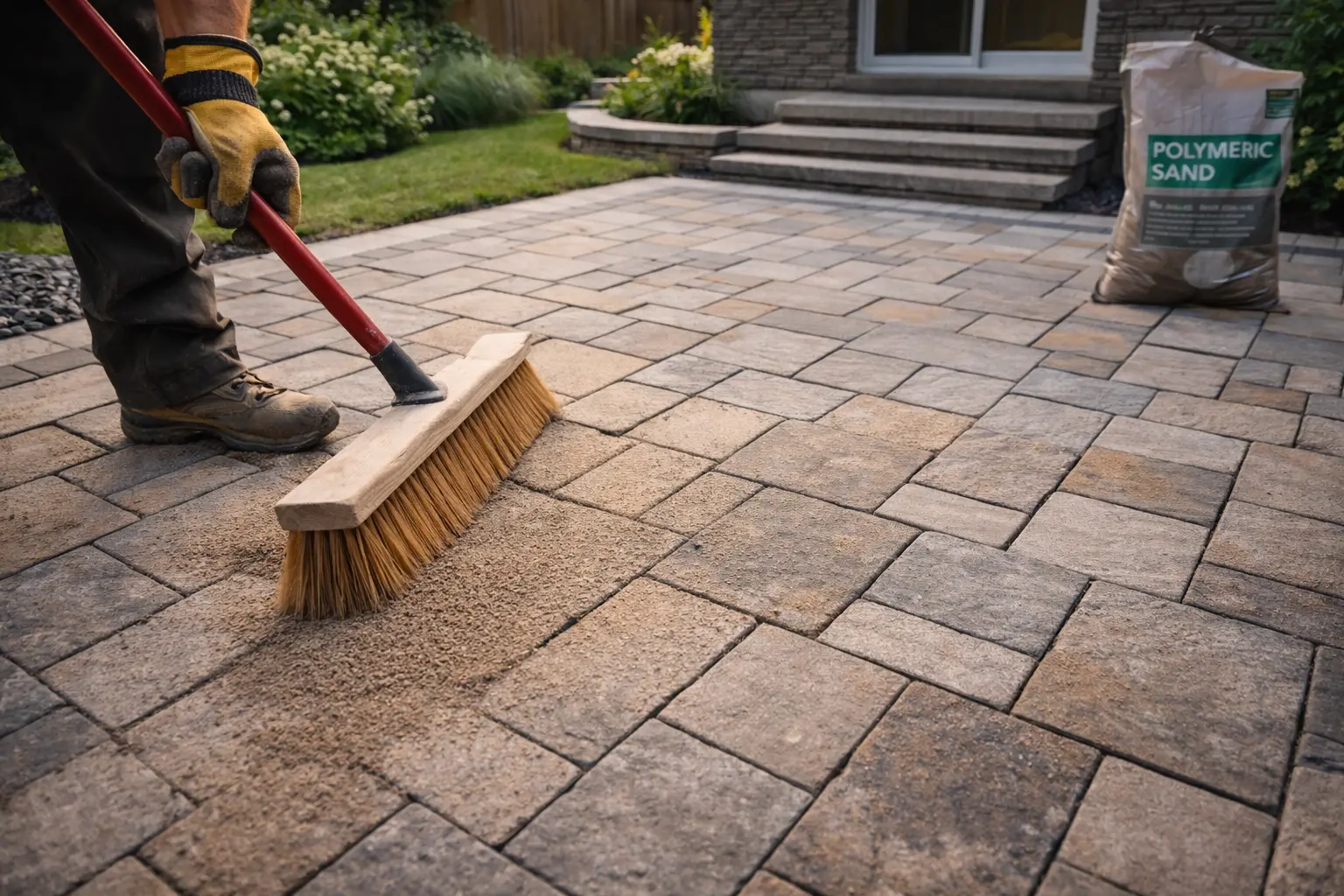
Polymeric sand can make interlock look cleaner, reduce weeds, and help lock pavers together.
But it’s not magic, and if it’s installed at the wrong time (or on a dirty surface), results can disappoint.
Homeowners often treat polymeric sand as a cosmetic add-on, but it performs best when the surface is stable, clean, and drainage issues are already addressed.
It hardens in the joints after activation, creating a more stable joint fill than regular sand.
That can help reduce weed growth and limit joint washout in heavy rain.
Polymeric sand is usually a good fit when:
Hold off if:
Most issues come from prep and timing.
Longevity depends on traffic, drainage, joint depth, and weather exposure. High-use driveways usually wear faster than low-traffic patios.
A good install can last years, but no joint material is permanent. Periodic touch-ups are normal and part of long-term maintenance.
Mild, dry conditions are ideal so joints can cure properly. Very wet or cold windows increase the risk of weak curing and washout.
Planning this work during stable weather generally produces cleaner joints and better durability.
A little prep helps the install go smoother and faster.
Quick next step
Not sure if polymeric sand is right for your driveway or patio? Call and we’ll recommend the best next step.