Interlock • Jan 23, 2026
A practical breakdown of excavation depth, compaction, grading, and edge restraint, so your interlock stays level through freeze/thaw.
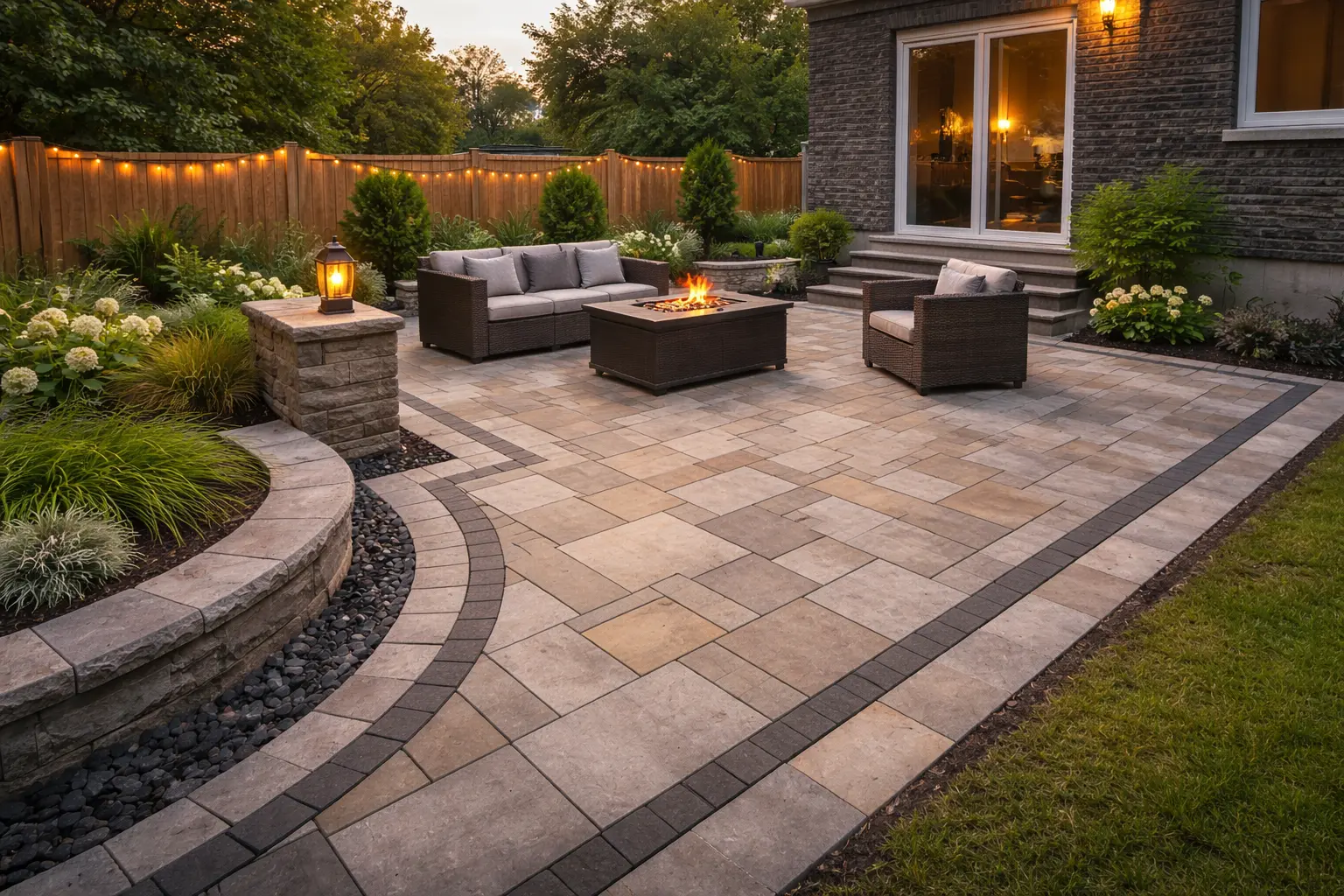
If you’ve ever seen interlock sink, shift, or start pooling water after a season or two, it usually comes back to base prep.
Here’s what “proper base prep” should include on an Ottawa project, explained in plain English.
When quotes look far apart, the difference is often in what happens underground. The surface can look similar on day one, but base quality is what decides how it performs after two or three winters.
Walkways, patios, and driveways don’t need the same base depth. A driveway typically requires a deeper, stronger base because of vehicle load.
Ottawa’s freeze/thaw cycles make depth and compaction especially important. Shallow or inconsistent excavation is a common cause of future settling.
Compaction should be done in layers (“lifts”), not by dumping all base material and compacting once.
Layered compaction creates a denser base that resists shifting, especially at edges and transitions.
Interlock shouldn’t be perfectly flat. You want a subtle slope that directs water away from the house and prevents pooling.
Good grading reduces ice buildup, helps the surface dry faster, and improves long-term stability.
Edges are where movement starts. Proper edge restraint keeps the field pavers from spreading outward over time.
If you see borders pulling away or joints opening up, the edge system may be failing.
The bedding layer should be consistent and properly screeded so pavers sit evenly across the surface.
After install, joints should be fully filled and compacted. Incomplete joints can accelerate movement and weed growth.
Good projects account for where water goes at transitions: garage thresholds, foundation walls, steps, and side-yard tie-ins.
Ignoring these details can create pooling zones or ice patches even if the paver field looks good at first glance.
These are common warning signs homeowners should watch for:
Use this checklist during quoting so you can compare apples-to-apples.
Quick next step
Want a fast quote? Call us and we’ll confirm your scope, access, drainage, and timeline in a quick call.